
Reverse-Engineered Crane Wheels — No Drawing, No Shipping Required.
No drawing. No part number. No shipping. Send UTEC photos, measurements, and any available specifications — our engineers start the same day, collaborate directly with you on the drawing, and manufacture exact-fit replacements.
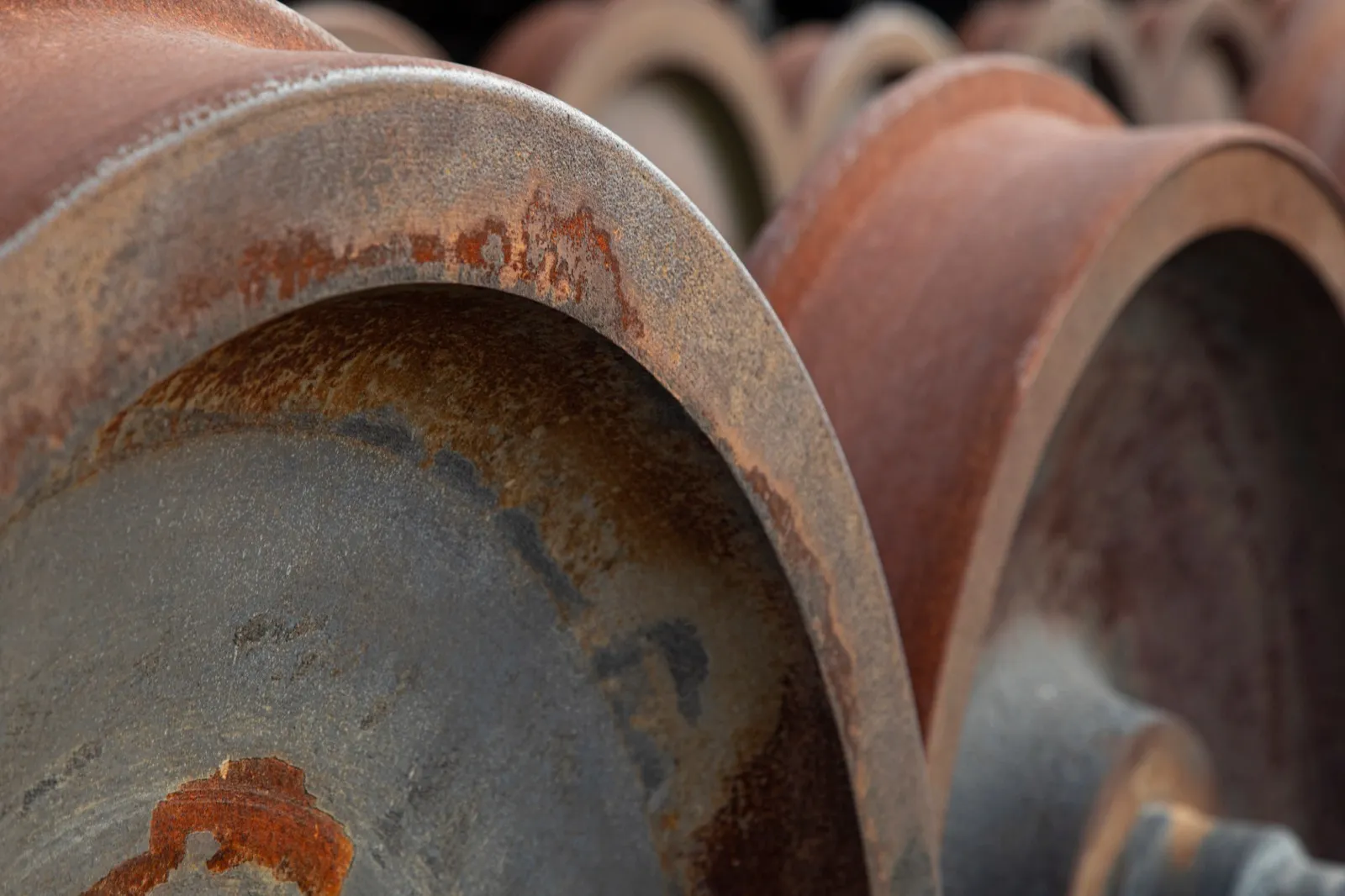
Starts the Same Day
No packaging. No carrier scheduling. No transit time. When a crane is down, submitting photos and measurements digitally gets UTEC engineers working immediately — not after a multi-day freight delay.
Direct Collaboration
UTEC engineers work directly with you — reviewing documentation, asking targeted follow-up questions, and sending the completed drawing for your approval before any machining begins. You stay in the loop at every step.
More Information, Not Less
Photos from multiple angles often reveal wear patterns and context that a single physical sample cannot — including the crane environment, rail condition, and adjacent components. Written specifications eliminate ambiguity about alloy grade, service class, and hardness requirements.
How UTEC Reverse Engineers a Crane Wheel
Submit Photos, Measurements & Specifications
Email photos and measurements to UTEC, or call (509) 922-1832. Photos needed: face view, side profile, bore end, and any unworn surfaces. Measurements to take: bore diameter (most critical — measure carefully with calipers), overall width, and any readable OD. Context that helps: crane make, model, rated capacity, duty cycle, and photos of any OEM data plates. No need to ship the part — heavy industrial wheels can stay on-site.
Engineering Review & Follow-Up
UTEC engineers review the submitted photos and measurements. Wear patterns are analyzed — not just current dimensions, but where and how the wheel failed. Uniform tread wear is different from premature spalling, flange-only wear, or fretting corrosion at the bore. If any dimension is unclear or a critical measurement is missing, UTEC will contact you with a specific, targeted question. Most submissions resolve in one or two exchanges.
Dimensional Measurement
All critical geometry is reconstructed from the submitted photos and measurements: outside diameter (estimated if uniformly worn — see FAQ below), bore diameter and length, hub face-to-face width, tread face width, flange height on each side, flange angle from unworn inner face surfaces, keyway width and depth, and any custom features. Bore diameter is typically the most reliable reference dimension — it is protected from service wear and usually reflects the original specification exactly.
Specification Review
Material and hardness are reviewed against the observed wear pattern. If the tread shows early spalling at a consistent depth, UTEC evaluates whether the original case depth was adequate for the service class. If flange wear outpaces tread wear, UTEC considers whether a tread profile or flange geometry correction would extend service life in the replacement. UTEC contacts the customer before manufacturing begins — any proposed improvement is confirmed, not assumed.
Engineering Drawing Produced
A formal dimensioned drawing is produced from the measurements and the customer-confirmed specification. The drawing is sent to the customer for review and approval before any machining begins. This step gives the customer the opportunity to correct any dimension that conflicts with their own records or institutional knowledge of the crane.
Manufacture and Harden
CNC machining on Mazak or Monarch lathes to ±0.001 inch on tread diameter and bore. Tread and flange profiles machined to the approved drawing. In-house induction hardening to the specified Rockwell value, with tempering immediately after quench. Rockwell hardness tested at multiple points on the tread circumference and across the tread width before acceptance.
Ship with Full Documentation
Finished wheels ship with complete documentation: the engineering drawing produced in step 5, raw material chemistry documentation, hardness test results, and dimensional inspection report. Customers receive a permanent engineering drawing they can use for all future replacement orders — no repeat reverse engineering required.
UTEC Doesn't Just Copy a Worn Wheel. It Improves On What Failed.
When a crane wheel wears out, the wear pattern is a diagnostic. Tread spalling at a consistent depth often indicates the original induction-hardened case was too shallow for the actual service class — not enough case depth means the high-stress zone beneath the contact patch reaches the case-core interface, initiating subsurface fatigue cracks. Flanges wearing faster than the tread suggest lateral guidance issues or a tread-to-rail geometry mismatch that will wear out the replacement just as fast unless corrected. UTEC engineers read the worn wheel before they quote the replacement. If the original specification was inadequate, UTEC proposes an improvement and explains the reasoning. The customer decides — but UTEC will always raise it.
Root cause analysis guide → Crane Wheel Failure Modes: Root Cause Analysis
Frequently Asked Questions
How do I submit a worn crane wheel for reverse engineering?
Send photos and measurements to UTEC — no need to ship the part. Photos needed: face view of the tread and flange, side profile, bore end view, and close-ups of any unworn surfaces (typically the bore area and inner flange faces). Include a scale reference in at least one photo. Measurements: bore diameter (inside, with calipers), overall width face-to-face, and any readable outside diameter on an unworn surface. If a keyway is present, its width and depth. Context: crane make and model, rated capacity, service class if known, and photos of any OEM data plates. Email or call (509) 922-1832 — UTEC will follow up within one business day.
How long does the reverse engineering process take from submission to shipment?
Because there is no shipping delay for the worn part, the process starts immediately. The drawing step typically takes one to two business days from receipt of photos and measurements. Drawing approval by the customer adds time depending on the customer's review cycle — UTEC will send the drawing as soon as it is complete and ask for approval or feedback. Production lead time after drawing approval depends on wheel diameter, alloy grade, and current shop load. Call UTEC with your timeline and they will give a current estimate for your specific wheel.
What photos and measurements do I need to submit?
Photos from at least four angles: (1) face-on view of the tread and flange; (2) side profile; (3) bore end view; (4) close-up of the inner flange face or any surface that is unworn. Include a scale reference (ruler or tape measure) in at least one photo. Measurements: bore diameter (inside, with calipers), overall width face-to-face, and any readable outside diameter on an unworn surface. If a keyway is present, its width and depth. Photos of any OEM data plates or markings are helpful. Send whatever you have — UTEC engineers will work with the available documentation and follow up with specific questions if needed.
How is tread diameter estimated when the worn wheel has no unworn tread surface?
For uniformly worn wheels where the entire tread surface has worn below the original diameter, UTEC uses three methods that typically converge: first, working backward from the crane's rated capacity and end truck geometry using the CMAA (Crane Manufacturers Association of America) wheel load formula to determine the minimum wheel diameter the original designer would have specified; second, comparing with standard crane wheel sizes for the crane's manufacturer and approximate vintage; third, the bore-to-flange-face proportion, which follows standard hub geometry relative to wheel diameter. In most cases at least two of these agree, giving high confidence in the original diameter. The reconstructed drawing is sent to the customer for approval before machining — if the customer has any conflicting information (an old maintenance record, OEM manual, or photograph of the nameplate), that is the time to provide it.
Can UTEC reverse-engineer a single wheel, or is there a minimum order quantity?
UTEC accepts single-wheel orders for reverse engineering. There is no minimum quantity above one wheel for this service. If the crane uses multiple identical wheels (all four end truck wheels, for example) and the submitted photos represent all four, UTEC recommends ordering all matching wheels in the same production run — the dimensional accuracy will be consistent, and the production setup cost is spread across the batch. But if only one wheel failed and the others are serviceable, a single replacement is the right order.
What if I have two worn wheels from the same crane — should I photograph both?
Photograph the wheel in worse condition first — it will typically show the full spectrum of wear and give UTEC the most information for the specification review. If one wheel has different wear from the other (for example, the drive wheel versus the idler), photograph both and submit all images. Different wear patterns on paired wheels can indicate misalignment, unequal loading, or a specification difference between drive and idler positions that the replacement specification should address.
Related Technical Reference
More Crane Wheel Pages
Get a Quote — No Drawing, No Shipping Required
Send UTEC photos, measurements, and any available specifications — our engineers will reconstruct the geometry, produce engineering drawings for your approval, and manufacture exact-fit replacements. No transit delays. Starts the same day. Call (509) 922-1832 or use the contact form.
Contact UTECLast updated: