
UTEC Industrial · Heat Treating & Annealing
Heat Treating and Annealing
UTEC Industrial's on-site car-bottom furnace and induction hardening equipment provide annealing, stress relieving, normalizing, and surface hardening for industrial components — all integrated with our fabrication and CNC machining operations.
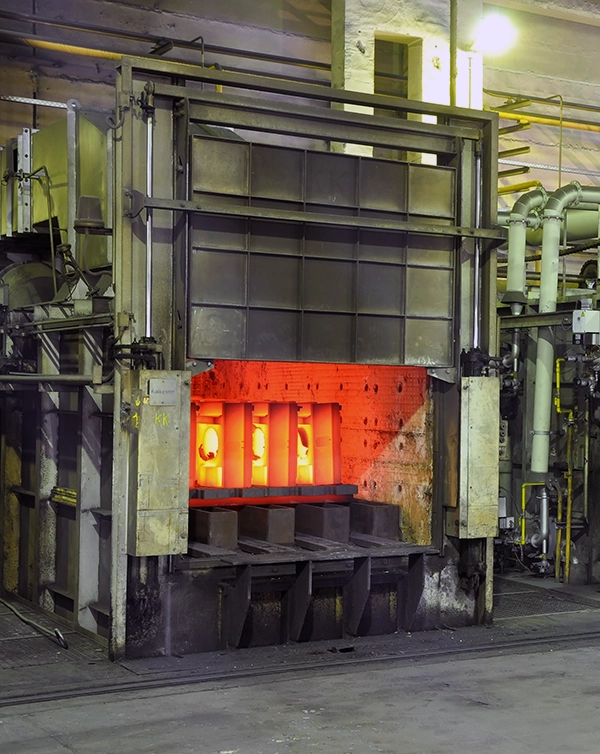
On-Site Heat Treating Capabilities
UTEC operates a car-bottom furnace and induction hardening equipment on-site in our 25,000 sq ft facility. Having heat treating in-house eliminates the delays, handling damage, and quality uncertainty of shipping parts to outside heat treaters — keeping your project on schedule and under UTEC's quality control from start to finish.
Heat treating is a critical step in manufacturing heavy industrial components. Weldments require stress relief to prevent distortion during machining. Crane wheels need induction-hardened treads for wear resistance. Structural components may need normalizing to refine grain structure after hot forming. UTEC performs all of these processes on-site, coordinated with our fabrication and machining schedules.
UTEC's heat treating operations serve both internal production and outside customers. Whether you need stress relief for a single weldment or production heat treating for a run of crane wheels, UTEC has the capacity and expertise to meet your requirements.
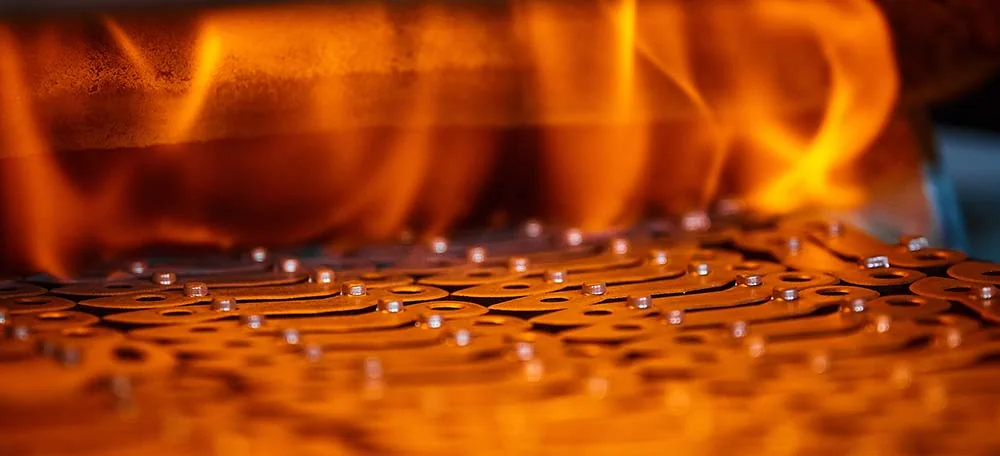
Car-Bottom Furnace Specifications
UTEC's car-bottom furnace is sized for large weldments, structural components, and heavy industrial parts that require controlled heating and cooling cycles.
| Specification | Value |
|---|---|
| Furnace Type | Car-bottom (roll-in/roll-out) |
| Interior Dimensions | 6 ft wide × 10 ft tall × 17 ft long |
| Maximum Temperature | 1,800 °F (982 °C) |
| Load Capacity | 50 tons |
| Temperature Control | Programmable ramp and soak cycles |
| Loading Method | Overhead crane to car-bottom cart (3-ton to 50-ton cranes available) |
Heat Treating Processes
Annealing & Stress Relief
Stress relieving removes residual stresses induced by welding, machining, or forming — preventing distortion during subsequent machining operations and improving dimensional stability in service. UTEC performs stress relief on weldments, fabricated structures, and machined components using controlled ramp-and-soak cycles tailored to the material and part geometry.
Full annealing softens material for improved machinability or to restore ductility after cold working. UTEC's car-bottom furnace accommodates large weldments and structural components that exceed the capacity of most commercial heat treating furnaces.
Normalizing
Normalizing refines grain structure in carbon and alloy steels after hot rolling, forging, or heavy welding. Parts are heated above the upper critical temperature and air-cooled to produce a uniform, fine-grained microstructure with improved mechanical properties. UTEC normalizes structural components, forgings, and heavy plate weldments as part of our integrated fabrication process.
Induction Hardening
UTEC operates in-house induction hardening equipment for surface hardening of crane wheels, shafts, rollers, and other wear components. Induction hardening produces a hard, wear-resistant surface layer while maintaining a tough, ductile core.
Process Overview
Induction hardening uses electromagnetic induction to rapidly heat the surface of a steel component, followed by quenching to produce a martensitic surface layer. The depth of hardening is controlled by frequency, power, and heating time. UTEC hardens crane wheel treads to 50–58 HRC (Rockwell C hardness), providing the wear resistance needed for millions of load cycles on hardened crane rails.
Applications
- Crane wheel tread hardening (50–58 HRC)
- Shaft and roller surface hardening
- Wear surface hardening for material handling components
- Guide rail and track hardening
Vibratory Stress Relief
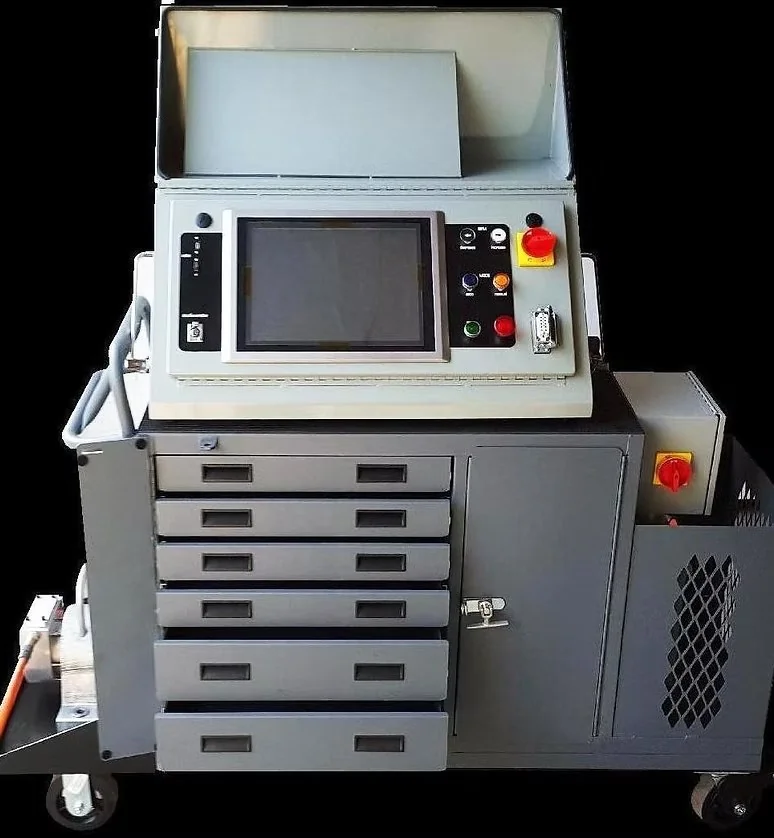
For weldments and fabricated structures that exceed the physical dimensions of the furnace, UTEC offers automated vibratory stress relief (VSR) as an alternative to thermal stress relieving.
Vibratory stress relief uses controlled mechanical vibration to reduce residual stresses in welded and fabricated structures. The process works by inducing resonant vibrations that cause micro-yielding at stress concentration points, redistributing and reducing internal stresses without heating the part.
VSR is particularly useful for large weldments that will not fit in a furnace, time-sensitive projects where furnace scheduling would delay production, and assemblies with components that cannot tolerate furnace temperatures (such as bearings, seals, or pre-machined surfaces).
Frequently Asked Questions
What heat treating processes does UTEC offer?
UTEC provides annealing, stress relieving, normalizing, induction hardening, and vibratory stress relief. The car-bottom furnace handles thermal processes up to 1,800 °F for parts weighing up to 50 tons. Induction hardening is available for crane wheels and other wear components. Vibratory stress relief is used for oversize weldments that exceed furnace dimensions.
What are the furnace dimensions and capacity?
UTEC's car-bottom furnace measures 6 ft wide x 10 ft tall x 17 ft long with a maximum load capacity of 50 tons. Maximum temperature is 1,800 °F (982 °C). The furnace uses programmable ramp-and-soak cycles for precise temperature control throughout the heating and cooling process.
What types of parts does UTEC heat treat?
UTEC heat treats weldments, structural fabrications, crane wheels, shafts, rollers, forgings, castings, and machined components. Parts range from individual crane wheels to multi-ton structural weldments for material handling equipment. UTEC heat treats both internally produced parts and outside customer work.
What is vibratory stress relief and when is it used?
Vibratory stress relief (VSR) uses controlled mechanical vibration to reduce residual stresses in welded structures without heating. VSR is used when parts exceed the physical dimensions of the furnace, when furnace scheduling would delay production, or when assemblies contain components that cannot tolerate furnace temperatures. UTEC uses automated VSR equipment with real-time monitoring to verify stress reduction.
Related Resources
Learn more about heat treating processes and industrial component manufacturing from the UTEC Resource Center.
UTEC Resource Center
Technical articles on heat treating, crane wheel hardening, stress relief processes, and material specifications for industrial components.
Visit Resource CenterSteel Crane Wheels
UTEC manufactures precision crane wheels with in-house induction hardening. See our dedicated crane wheel page for materials, hardness specifications, and ordering information.
Crane Wheel SpecificationsRequest Heat Treating Services
UTEC Industrial provides on-site heat treating, annealing, stress relieving, and induction hardening for heavy industrial components. Contact us with your material and process requirements.
Get a Quote